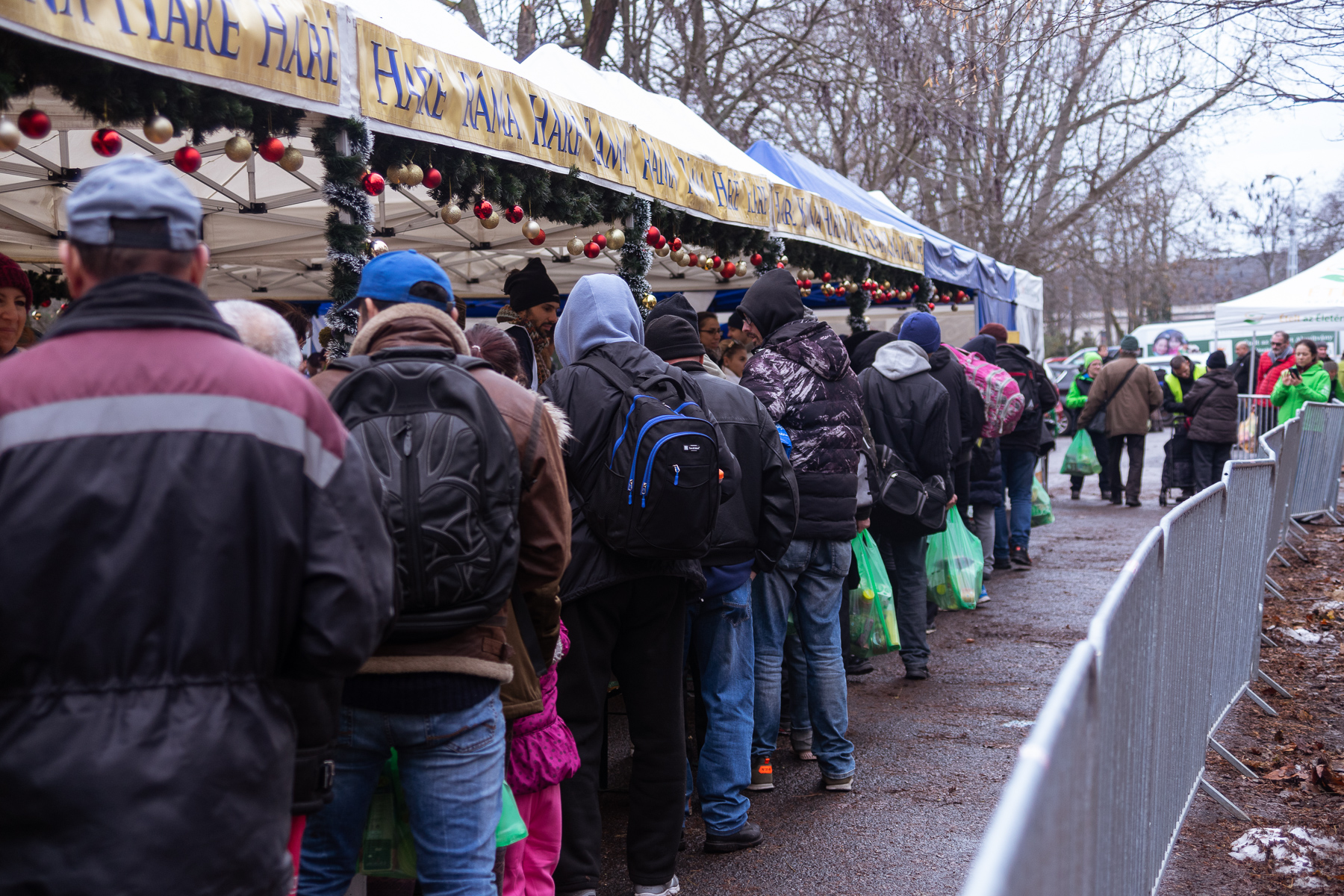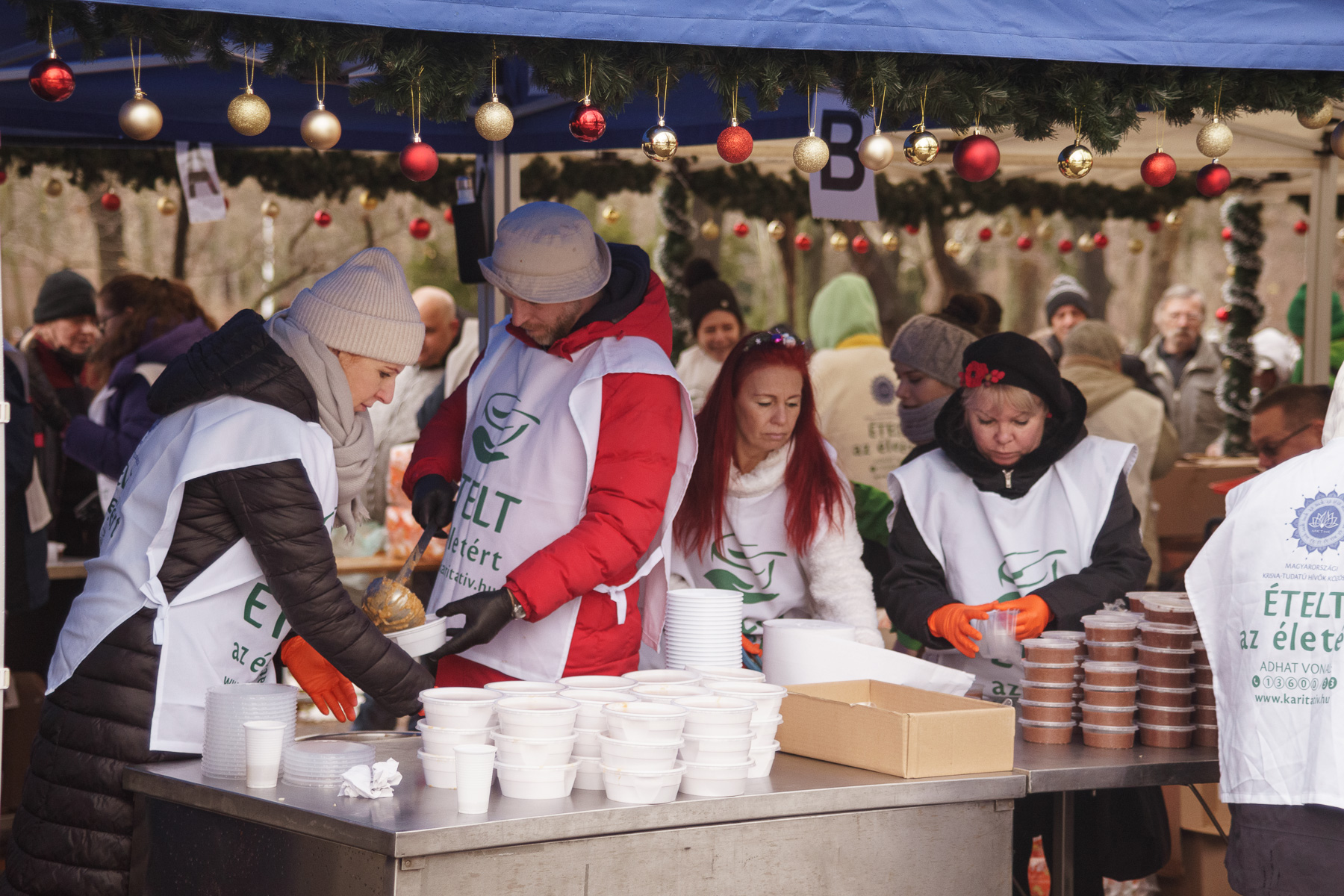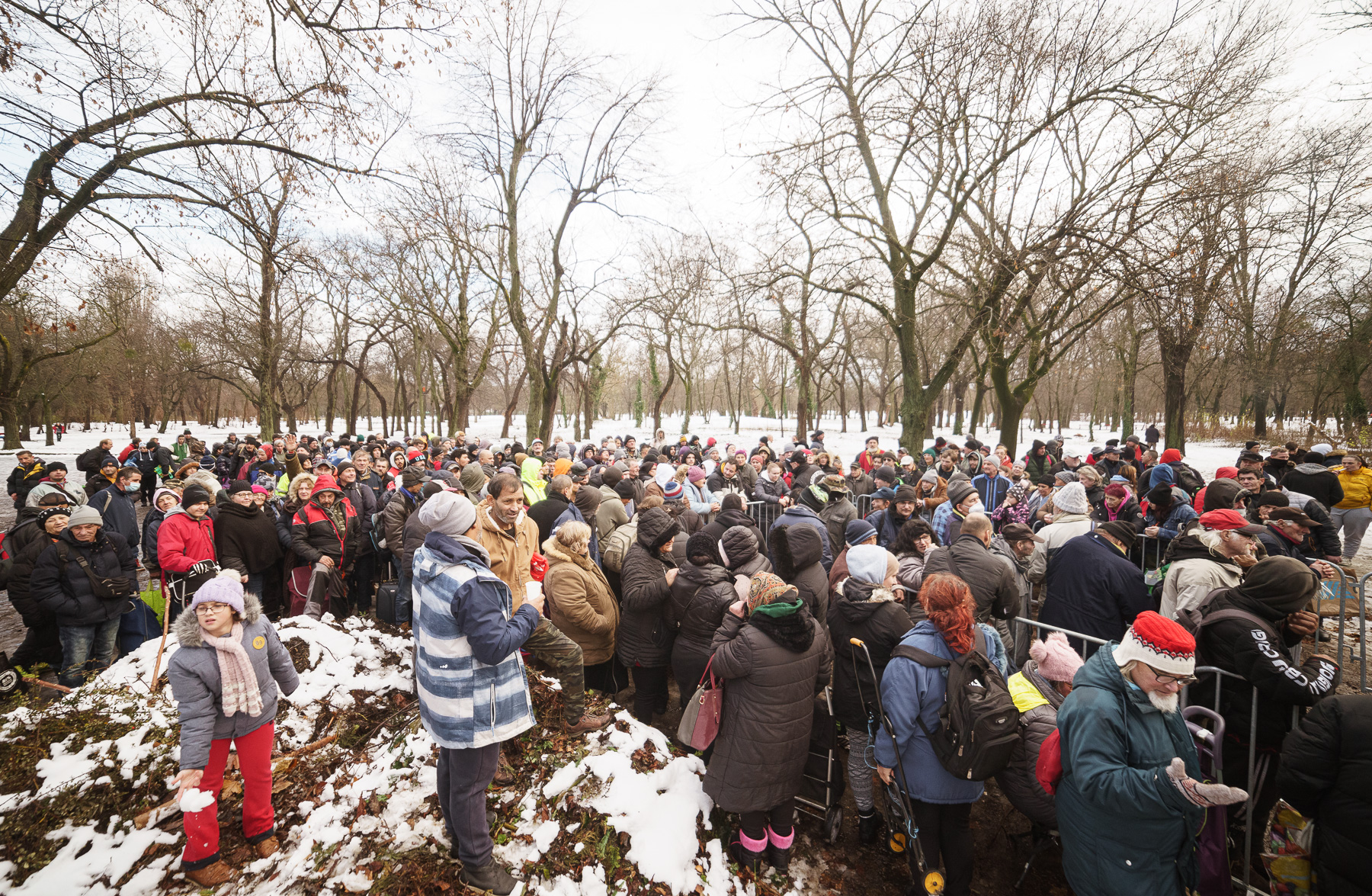

 The Christmas program series organized by the Krishna devotees’ “Food for Life” Mission is once again providing assistance to thousands of people during the holidays. As the highlight of the campaign, those in need are invited to Népliget in Budapest from December 24 to 26, where they will be provided with hot lunches and packages of non-perishable food.
 The Advent food distribution series of the “Food for Life” humanitarian program organized by the Krishna devotees is nearing its peak; the initiative runs from November 30 to January 25. During this time, a total of 10,000 servings of holiday meals and non-perishable food packages will be distributed to those in need at various locations across the country. The highlight of the program series each year is the Budapest Christmas Feast of Love, which will welcome those in need for three days—December 24, 25, and 26—at Népliget, next to the Planetarium building. The venue is easily accessible via the capital’s public transportation system, as well as by long-distance buses from towns in Pest County.
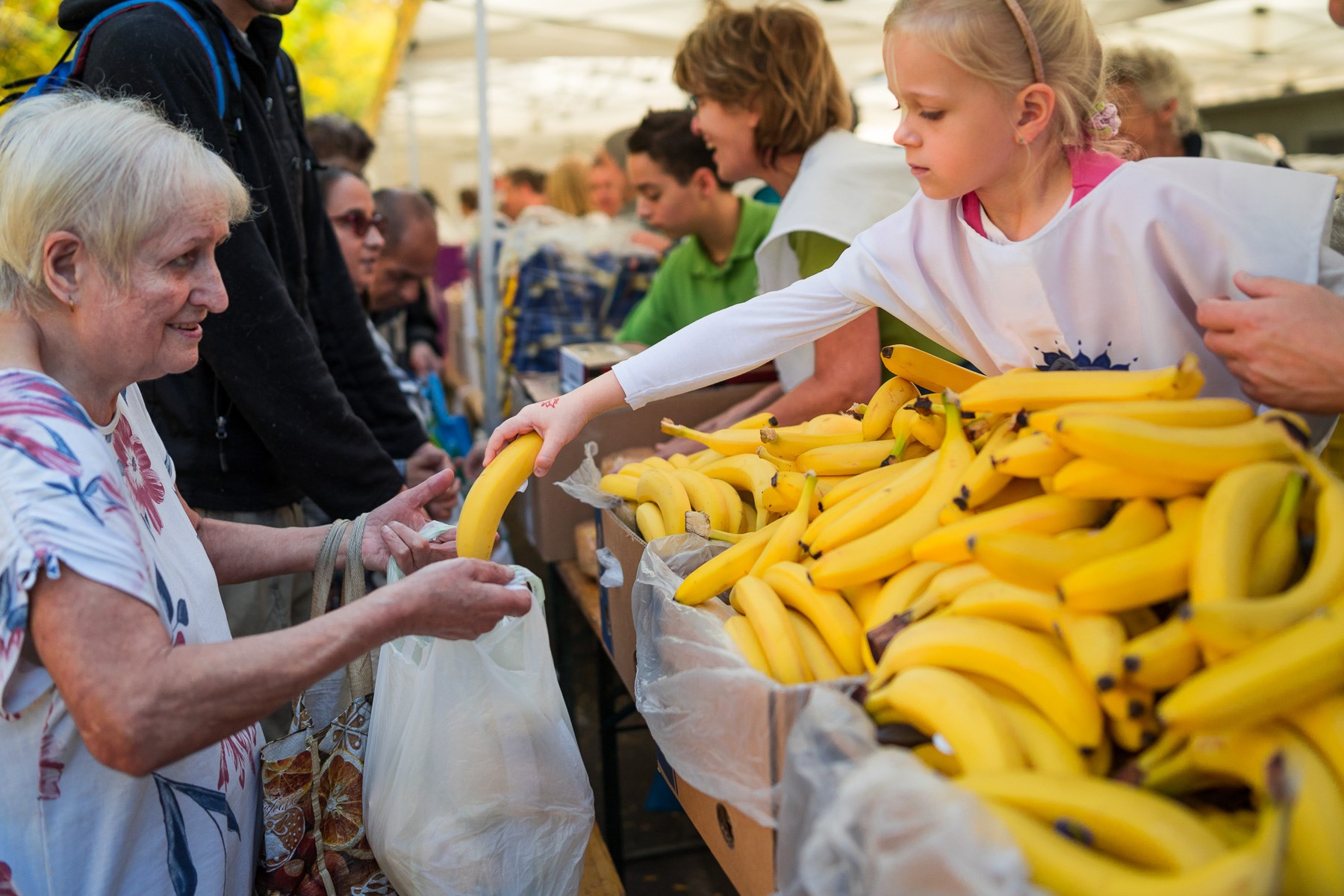
 During the holidays, Krishna devotees are once again striving to make Christmas a meaningful and hopeful time for the poor, so they will be providing 1,500 servings of hot lunch, sweets, hot tea, and a generous gift package to those who arrive each day. The gift package is guaranteed for the first 1,000 people who receive numbered wristbands. The aid package includes cooking ingredients, treats, and delicacies, as well as fresh fruit, with the health of children specifically in mind. In addition, the humanitarian program will deliver a Christmas meal to dozens of units of the Budapest Methodological Social Center and its affiliated institutions, providing a meal for an additional 1,000 homeless people each day. This is how Krishna devotees feel Christmas is truly complete—by serving others.
 Constant cries for help
In recent years, the organizers have received a flood of requests for help via email, social media, and phone, and this number increases exponentially as the holidays approach. Every day, people in need—from the most remote regions of our country as well as from the capital—reach out for food, clothing, or medicine. „Poverty has a thousand different faces,” say the organizers, “but experience shows that there are certain ‘typical problems’ that ultimately lead people to join the line for free food. These include, for example, the following:”
-> Temporary or long-term unemployment.
-> Problems arising from health conditions—illness, chronic illness, disability, recovery from surgery, organ damage, reduced work capacity.
-> Financial crises—loss of income due to an accident, a debt spiral.
-> Housing insecurity—especially among those who do not own their own homes and live in rented housing.
-> Livelihood crisis – poverty caused by low wages, primarily among large families; in the case of single-parent families, due to having to make ends meet on a single income.
-> Poverty in old age – a crisis resulting from low pensions.
-> Existential crisis – a crisis in one’s personal life, most often resulting from divorce, or the loss of assets.
-> Social isolation – people who are becoming increasingly isolated, widows and widowers who, lacking relatives, family support, solidarity, and attention, struggle alone to survive.
 „I’m on disability, I work a 4-hour shift, and I try to make ends meet doing sedentary work. I’ve been on my own since last year because my last remaining family member passed away, so I need quite a bit of help,” says one of the organization’s guests at the food distribution site in Szeged.
 According to Eurostat, 1.2 million people in Hungary live in homes in poor condition, 232,000 households lack access to public utilities, and 328,000 homes have no heating. Based on data from the Hungarian Central Statistical Office (KSH), poverty and social exclusion continue to affect millions of people, particularly in rural areas and among retirees. All of this explains why an increasing number of people are coming to the attention of the Food for Life Mission and other social organizations. According to the KSH survey, the situation is clearly most difficult for people who have suddenly become unemployed, but the relative poverty rate among retirees has also worsened. The good news, however, is that the experts who conducted the survey found an improvement in this area among those under 18.
 While in some communities unemployment and lack of transportation access may prevent people from earning a regular income, in the capital, disproportionately high housing and rent prices, as well as housing poverty, pose a challenge. People living in such circumstances rely, among other things, on the assistance of food distribution organizations so that they can reduce their food expenses, meet their other basic needs, and ensure their daily survival.Nationwide Campaign Series
The Christmas Charity Feast involves several districts and social institutions in Budapest, as well as Szeged, Békéscsaba, Somogy County, Eger, Debrecen, and Bonyhád, with hundreds of volunteers and donors participating in its organization. Government spokesperson Eszter Vitályos and Kossuth Prize-winning conductor Iván Fischer will once again take part in the food distribution at Népliget, and „Experience Gardener” Zsolt Perge and Vallabhi, the popular Krishna-inspired TikToker, will also be present.
 The Krishna Devotees’ Christmas Feast of Love has been helping those in need during the holiday season for more than three decades, and volunteers prepare not only many delicacies but also thousands of smiles for those who need support the most. Over the years, the Christmas food distribution has become a symbol of selfless care and kindness—a kindness that can offer hope even in the hardest of times.
You can support the work of the Hare Krishna Food for Life Mission here: www.karitativ.hu
 The Food for Life Mission team warmly dedicates this year’s festive food distribution efforts to the memory of Péter Pálok (Mahájana Dása), one of the first Hungarian Krishna devotee pastors, a pillar of the Hungarian movement, who for many years participated in the work of Food for Life—for example, by coordinating volunteers—and who recently passed away.