

The Food for Life Foundation moved from the 2nd district of Budapest to the 3rd district, Csillaghegy in 2004. With the development and expansion of a programme in District III, which started in January 2009, in 2011 the Foundation will distribute 400 meals a day, five times a week, in the district where it is based.
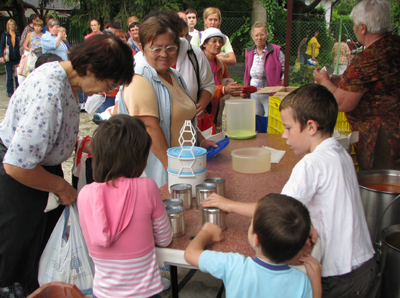
Our food programme in the districts of the capital has three target groups: those who are already receiving some kind of benefits but not enough, those who are seeking social assistance, and those who do not recognise their own eligibility and refrain from accepting benefits - these are perhaps the most difficult to reach. Our organisation focuses on identifying and reaching the latter two target groups.
Exemplary cooperation system in the district
Óbuda is home to a number of social organisations, and the district and metropolitan institutions also provide high-quality care for the elderly, families and people with disabilities. Within this system of cooperation, our organisation can provide additional support by providing food for families with many children and for people living below the subsistence level. In terms of the type of care, we are also guided by the integrated care policy in the capital, and our aim was to develop a more versatile service based on cooperation and the integration of the care system.
It has long been our desire to help not only the needy who come to Blaha, but also families living below the poverty line, people who find it difficult or impossible to face their plight in public. Those who are unable to attend our downtown food distribution because of the number of children they have or their living conditions. With the approval of Mayor Balázs Bús and the cooperation of the Municipality, we wanted to reach out to these people in District III first. Our efforts were crowned with success! Through the current Family Care Referral Scheme, we can be sure that the local people we serve are in real need of support because of their living situation.
Around our own house
In 2008, our Foundation initiated negotiations with the management of District III on our responsibility. Following discussions with the local government's social services department, we launched a catering programme in the area on a pilot basis. At the start of the programme, the Family Care Service selected 300 of the 1200 most deprived residents of the district to receive hot meals once a week. The contact with the needy and the provision of the venue was therefore the responsibility of the Municipality and the Family Care Service, while the Foundation was responsible for preparing and serving the meals. The programme now runs 5 days a week, in two locations, for 400 people!
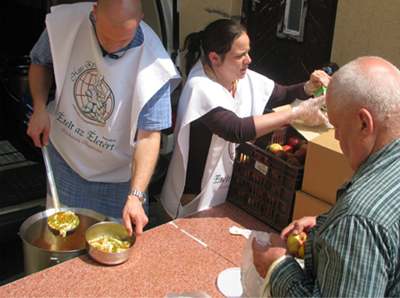
The recipients are exclusively from the district population, and are made up of families, pensioners, retired people, the unemployed and, according to the assessment of the family support staff, the most deprived people in the district. For many of those who turn to family support, this is the only opportunity to have a hot meal once a day, which is a basic right of all people under the law. Some people are not hungry, but are unable to provide themselves with nutritious, quality food. According to the Family Carer, 80% of the beneficiaries claim support because of financial difficulties and unemployment, so that if they can manage to eat, they can use the money saved to pay off their debts or buy medicines and nappies, which are often considered luxuries.
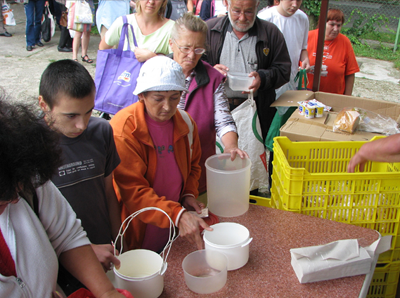
Our service in District III is a source of satisfaction for us, because it helps a large number of people and practically all the people in our own neighbourhood who are in difficult circumstances, including many children. We consider it particularly important to promote this example of help, because if everyone would make an effort to help at least those in difficulty in their neighbourhood to get on, we could be the first step in the fight against poverty. In the current economic climate, the situation for foundations is not easy and growth is almost unthinkable. Yet we hope that, through well-organised cooperation, we will be able to keep pace with the rapidly growing needs of late.